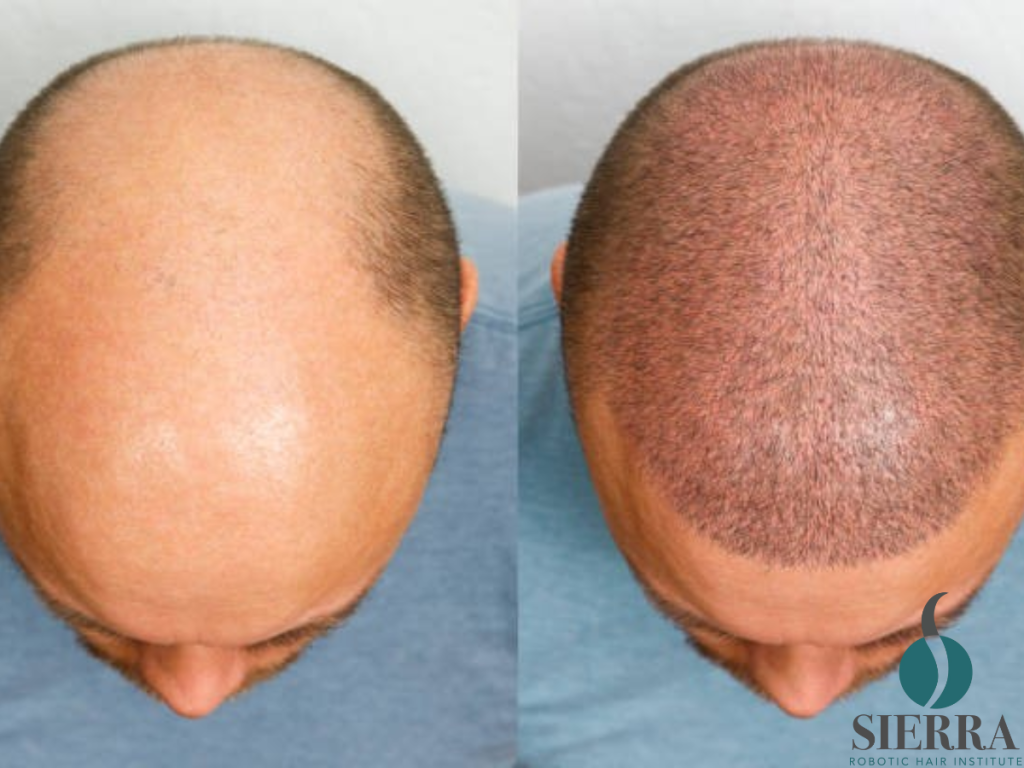
The impact of hair loss extends beyond appearance; it can also affect self-esteem, confidence, and relationships, both professional and personal.
And with millions of men and women impacted by hair loss and thinning, it can seem like a daunting challenge to overcome.
Hair loss can be caused by a variety of factors, including genetic predisposition, stress, reactions to certain medications, and environmental influences.
But what can those impacted by hair loss do to overcome the challenges of hair loss and thinning? There are multiple solutions to restore a full, healthy head of hair without resorting to surgical intervention.
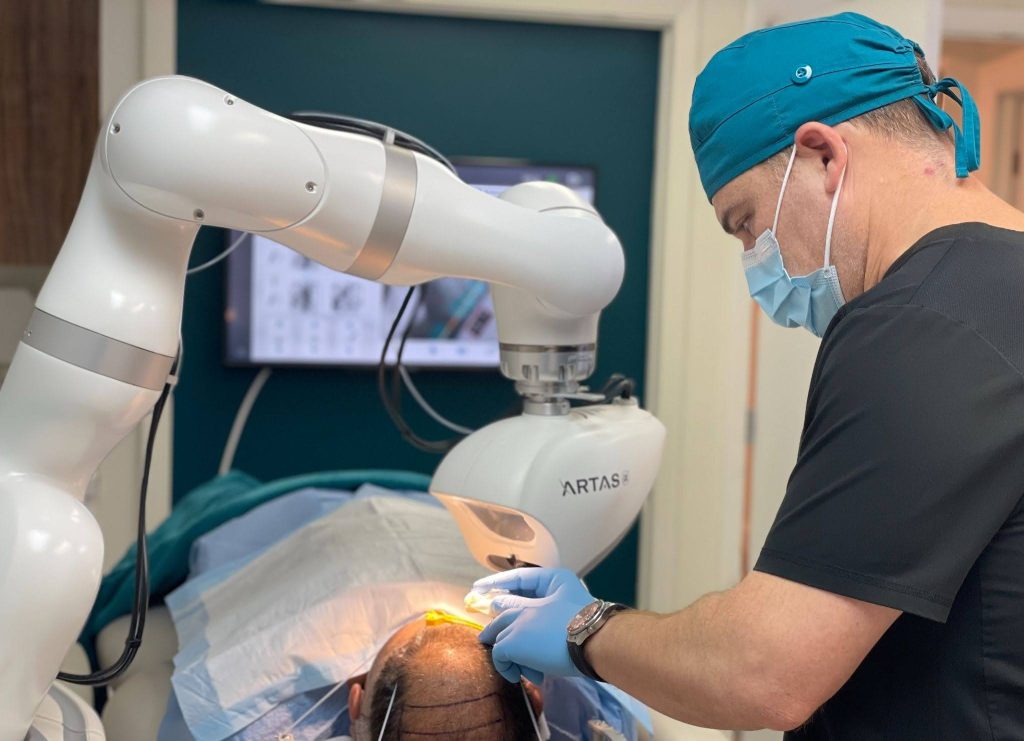
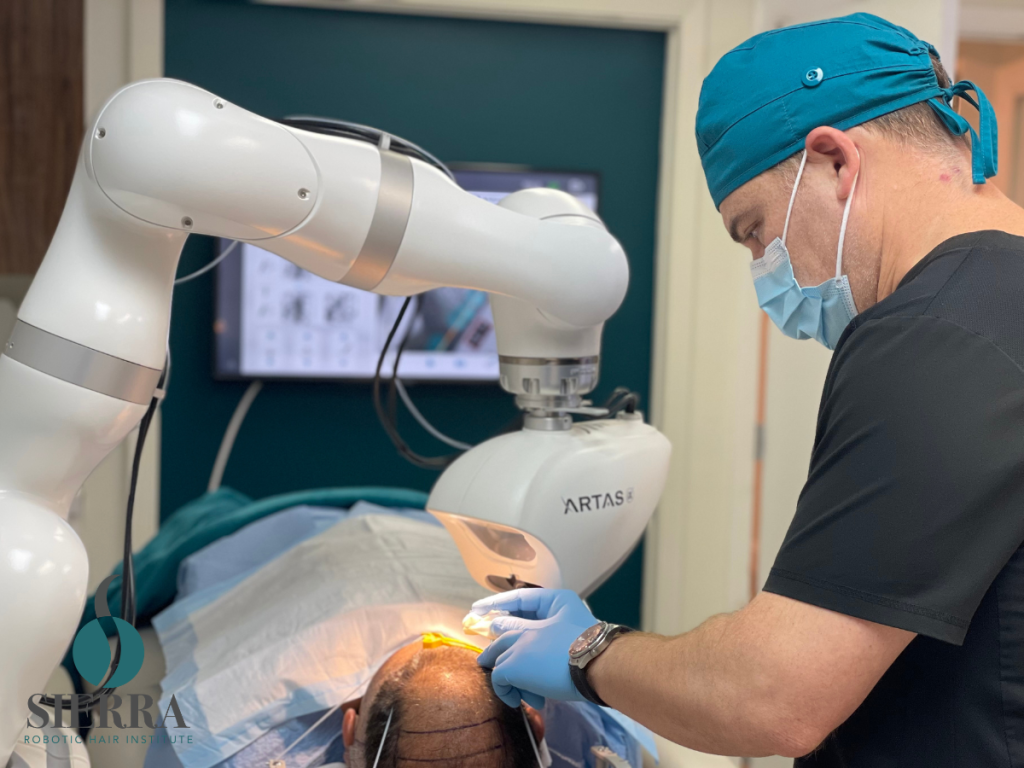
At Sierra Robotic Hair Institute, we offer the latest innovative techniques, including scalp micropigmentation, topical therapy, PRP therapy, and laser hair restoration therapy.
In this guide, we’ll examine the benefits of each and weigh the pros and cons of each, so you can make an educated decision about your hair restoration journey.
Understanding Causes of Hair Loss
Often, hair loss begins subtly and is hard to detect. It can be a widening part line, a slightly receding hairline, or a little shedding in the shower.
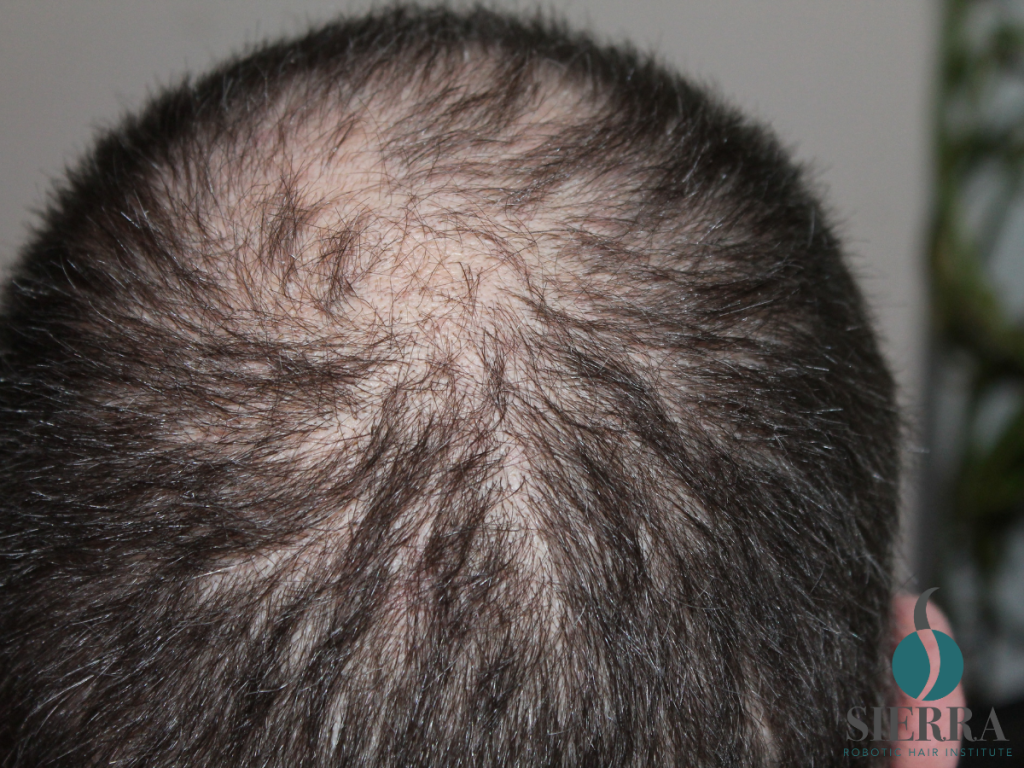
Over time, what was a minor thinning issue can lead to severe hair loss and bald patches.
While there are various causes of hair loss, understanding the most common ones will help determine the right treatment and restoration therapy for your specific hair loss needs.
The most common cause of hair loss is a hereditary one, known as androgenetic alopecia, and it affects about 50 million men and over 30 million women in the U.S. alone.
Typically, this type of hair loss runs in families and may begin as early as a person’s 20s or 30s, becoming more pronounced with age.
Other causes may be related to hormonal imbalances associated with underlying health concerns, pregnancy, menopause, and other age-related changes.
Stress and environmental factors can also contribute to hair loss, as can scalp infections, nutritional deficiencies, and autoimmune conditions such as alopecia areata.
Effective hair restoration is a combination of proper diagnosis and treatment plans tailored to the specific cause and individual.
That’s because what treatment option works for one person may not be adequate or suitable for another, which is why professional consultation is crucial for proper treatment and for hair restorative therapies to be effective.
Now that you understand that a variety of factors can cause hair loss, let’s discuss different types of treatment and restoration therapies available.
Different Types of Hair Therapies
Identifying the root causes is the first step in creating an effective restorative therapy for your hair loss needs.
Once you know whether your hair thinning is caused by environmental, health, stress, or genetic factors, we can begin to discuss the best treatment program for you—one that addresses the causes and restores your hair.
You can choose between cosmetic solutions and laser hair restoration therapy, which is proving to be the most effective option for most types of hair loss.
At Sierra Robotic Hair Institute, we specialize in some of the most advanced treatment options, including:
- Scalp Micropigmentation
- Topical Solutions
- Platelet-Rich Plasma (PRP) Therapy
- Laser Hair Restoration Therapy
So, let’s discuss the various types of enhancements, topical solutions, and scientifically backed therapies that are available today.
1. Scalp Micropigmentation (SMP)
One of the least invasive options is scalp micropigmentation (SMP) therapy. As a cosmetic option, SMP involves a tattooing technique that uses microneedles to deposit pigment on the upper dermis of the scalp.
The goal of SMP is to make it appear that hair has regrown in a closely cropped hairstyle or to provide an illusion of density to already existing hair.
This procedure doesn’t grow or restore hair, but it creates a contrast between the bald scalp and natural hair, making it appear that there is a full head of hair.
Benefits of SMP:
Delivering instant results that enhance an individual’s aesthetics, SMP is ideal for those with a cropped, short, or shaved head who are looking for uniformity along their scalp.
Due to its cosmetic nature, this non-surgical remedy yields immediate results with no downtime and can last for up to six years without maintenance.
However, it’s essential to understand that scalp micropigmentation does not stimulate hair growth or regenerate new hair; rather, it is a visual cosmetic that creates the appearance of fuller hair without any actual growth or restoration occurring.
2. Topical Solutions
Most commonly known is Minoxidil, an FDA-approved solution available over the counter in two forms: liquid and foam.
Treatment includes daily applications that encourage blood flow to the follicles, thereby stimulating hair growth and extending the hair growth cycle.
These topicals are often composed of additional ingredients, including caffeine, saw palmetto, biotin, and others, to help stimulate hair follicles and encourage hair growth.
Benefits of Topical Solutions:
By being easily accessible and applicable, topical solutions are good options for people in the earliest stages of hair loss who don’t require extensive restoration. They are cost-effective, don’t require professional supervision, and can be easily incorporated into any daily routine.
There is some evidence that Minoxidil may stimulate regrowth in thinning areas, especially in regions such as the crown of the head, in as little as three months.
While ease of use and cost-effectiveness are attractive, the biggest drawback to topicals is that they require continuous use and application.
When topicals such as Minoxidil are stopped, new hair typically falls out, and bald patterns return to their previous condition.
Additionally, for some users, topicals can cause dry, flaking scalps that may become irritating. The results of topical options may be more modest and may take months to appear.
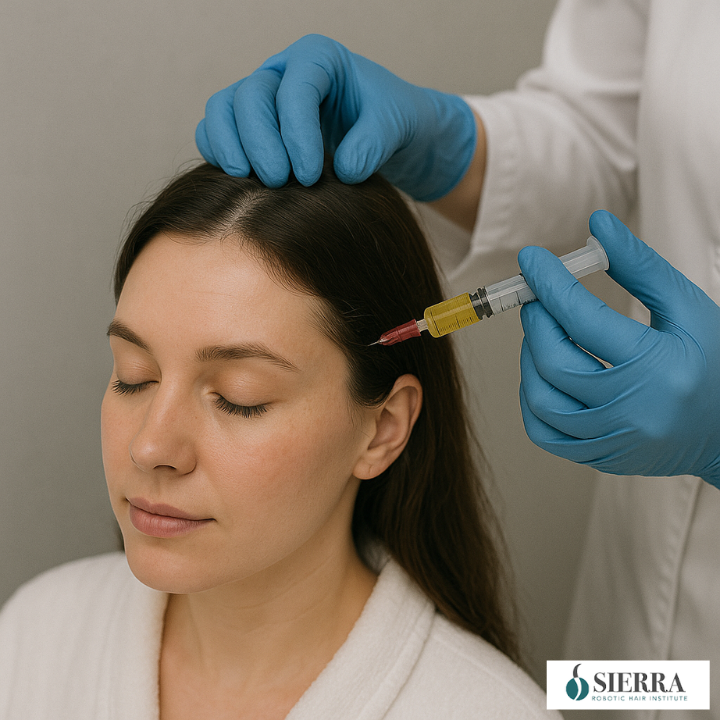
3. Platelet-Rich Plasma (PRP) Therapy
Platelets are protein-rich and derived from a patient’s blood, then processed to extract the proteins and reinjected into areas of thinning hair on the scalp.
These platelets help increase blood supply, promote healing, and stimulate dormant hair follicles to regenerate hair growth.
Benefits of PRP Therapy:
As a therapeutic option, PRP is a natural, drug-free treatment that utilizes the body’s blood to stimulate hair regeneration.
When combined with scalp micropigmentation or laser hair restoration therapy, the results are denser hair, making it a great option for someone looking for a minimally invasive procedure.
Additionally, the long-term results of PRP therapy can be customized, with minimal risk of allergic reaction and minimal discomfort.
One thing to keep in mind, however, is that PRP therapy requires multiple treatments—typically 3 to 6 sessions—with periodic maintenance to achieve results, depending on the individual’s hair loss.
While effective, PRP achieves its best results when coupled with other therapies, specifically laser hair restoration therapy.
4. Laser Hair Restoration Therapy
Laser hair restoration therapy uses red light wavelengths to stimulate hair growth at the cellular level.
Also known as low-level laser therapy (LLLT), the light energy penetrates the scalp, increases blood flow, and energizes hair follicles to promote regeneration and the growth of thicker, denser hair.
Sierra Robotic Hair Institute uses LLLT in-office as a solution for male and female pattern baldness by stimulating ATP production in cells to extend the growing phase of the hair cycle, and by reducing the resting phase of the growth cycle in hair follicles, making it easier to grow and maintain hair in thinning areas.
Benefits of Laser Hair Restoration Therapy:
Non-Invasive: The process involves directing light energy to the scalp painlessly, requiring no needles or other medical procedures.
Clinically Tested and Proven Effective: Low-level light therapy (LLLT) has undergone rigorous, peer-reviewed studies that demonstrate its effectiveness.
Safe with Minimal Side Effects: There have been no reportable adverse long-term effects, making LLLT a safe and effective option for those seeking a secure solution.
Convenient and Comfortable: Sessions are short, typically lasting 30 minutes, with no required downtime. You’re in and out quickly, allowing you to get on with your day.
While laser hair restoration therapy requires multiple treatments, patients typically see noticeable improvements in as little as three months, with long-term benefits.
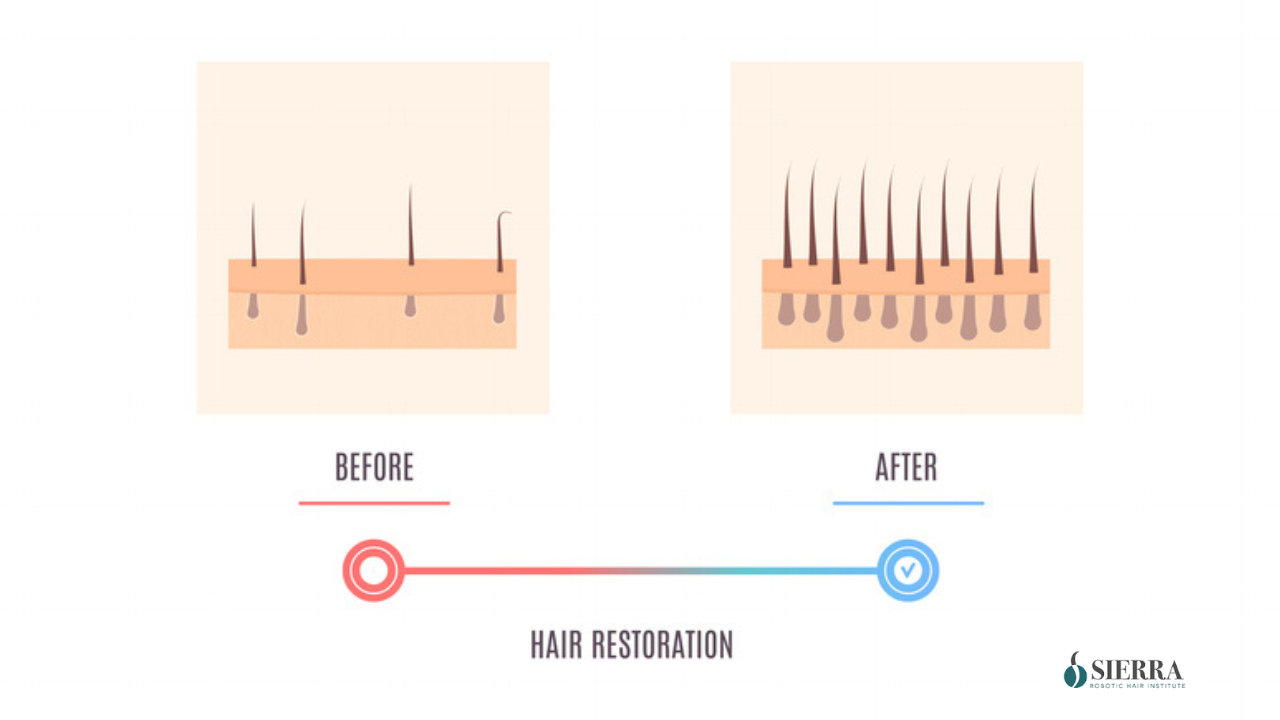
Why Choose Laser Hair Restoration Therapy
When it comes time to choose between different treatments available, Sierra Robotic Hair Institute believes that only laser hair restoration therapy offers the best of both worlds. It is medically proven to stimulate hair growth by simulating the follicles and is a safe, effective, non-surgical option.
Unlike some other therapies that merely cover up bald spots or require continuous chemical application, LLLT actively regenerates and heals dormant hair follicles.
Another feature is that the longer and more often laser hair therapy is utilized, the greater the results. It is also easily compatible with other treatments.
At Sierra Robotic Hair Institute, our mission is to help patients achieve the hair they want and deserve through an easy, effective, and comfortable process.
With personalized treatment plans, you can combine the best of state-of-the-art techniques and customized care.
If you’re looking for personalized care that shows real results—regardless of what stage you’re in on your hair restoration journey—Sierra Robotic Hair Institute has the customizable solution for you.
Get your FREE consultation and start your journey to a fuller, thicker head of hair with Sierra Robotic Hair Institute today!